
Dealing with Mold
The biology of mold discussed in Part II provides the foundation for effective prevention and response that we will discuss in Part III. This Part translates our understanding into practice: which specific events raise the risk of mold, how to manage and mitigate it, and some of the common challenges that institutions encounter.
Specific events that increase risk of mold
Humidity changes
Because mold depends greatly on moisture and temperature, changes in these parameters are usually the cause of an increase in the risk of mold growth. The risk of biodeterioration rises when relative humidity increases water activity to levels suitable for the mold life cycle, which can occur in the event of condensation, rainy seasons, leaks, or floods. The longer the higher moisture conditions persist, the greater the risk of growth.
Temperature changes
Temperature also matters for fungal development but is not as crucial as the presence of moisture. On one hand, an increase in temperature might bring conditions into the suitable range for mold to germinate and grow. On the other hand, a decrease in temperature will cause the relative humidity to rise, which in turn will increase the water activity of certain materials. This can occur in localised pockets such as the surface of a cold wall where condensation forms, elevating the risk of growth. As mentioned in Part II, mold can germinate and grow under a combination of ideal and suboptimal conditions, which means temperature changes are also important.
Dew Point changes
Unlike relative humidity, which fluctuates with changes in air temperature, dew point temperature reflects the absolute amount of moisture present in the air and remains stable unless the moisture content itself changes. This makes it a more reliable baseline for assessing ambient conditions, as a rising dew point indicates that moisture is genuinely accumulating rather than simply redistributing due to temperature shifts. When dew point approaches the temperature of surrounding surfaces, condensation becomes likely, creating the localized high-moisture conditions most associated with mold growth. Dew point is also widely used by HVAC engineers as a standard measure of moisture load, meaning it provides a useful common reference when coordinating with building services teams on ventilation and climate control. Monitoring dew point alongside temperature and relative humidity therefore gives a more complete picture of the conditions driving mold risk.
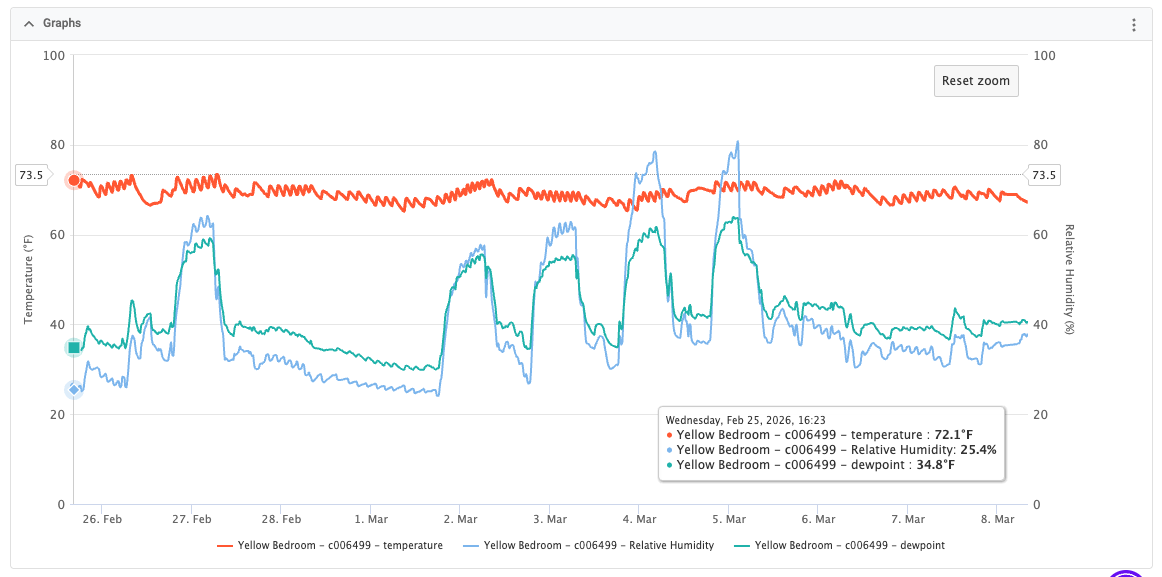
Fig. 6 A screenshot of Conserv analytics showing the dew point temperature (teal), relative humidity (blue), and temperature (red). If you only viewed the relative humidity data it would be hard to know if the temperature or the amount of moisture in the air (absolute moisture) were causing the humidity spikes, but looking directly at the dew point temperature shows more correlation between absolute moisture and relative humidity than temperature and relative humidity (these spikes were caused by a humidifier in the space).
Climate changes
We are witnessing changes in the climate in all parts of the globe. In some areas, wetter and warmer seasons can encourage mold growth, and extend the periods when growth is expected. These periods can also cause more intense growth and infestations. Many buildings were not designed to handle these shifting conditions, which has an impact on the indoor environment and potentially raises the risk of mold.
Contamination
The introduction of a contaminated object in a collection means that the environment in its proximity will have a higher concentration of spores – especially if the mold is very active or if it encounters the conditions to start sporulating. This is why incoming objects should be carefully inspected and cleaned before being integrated into the collection.
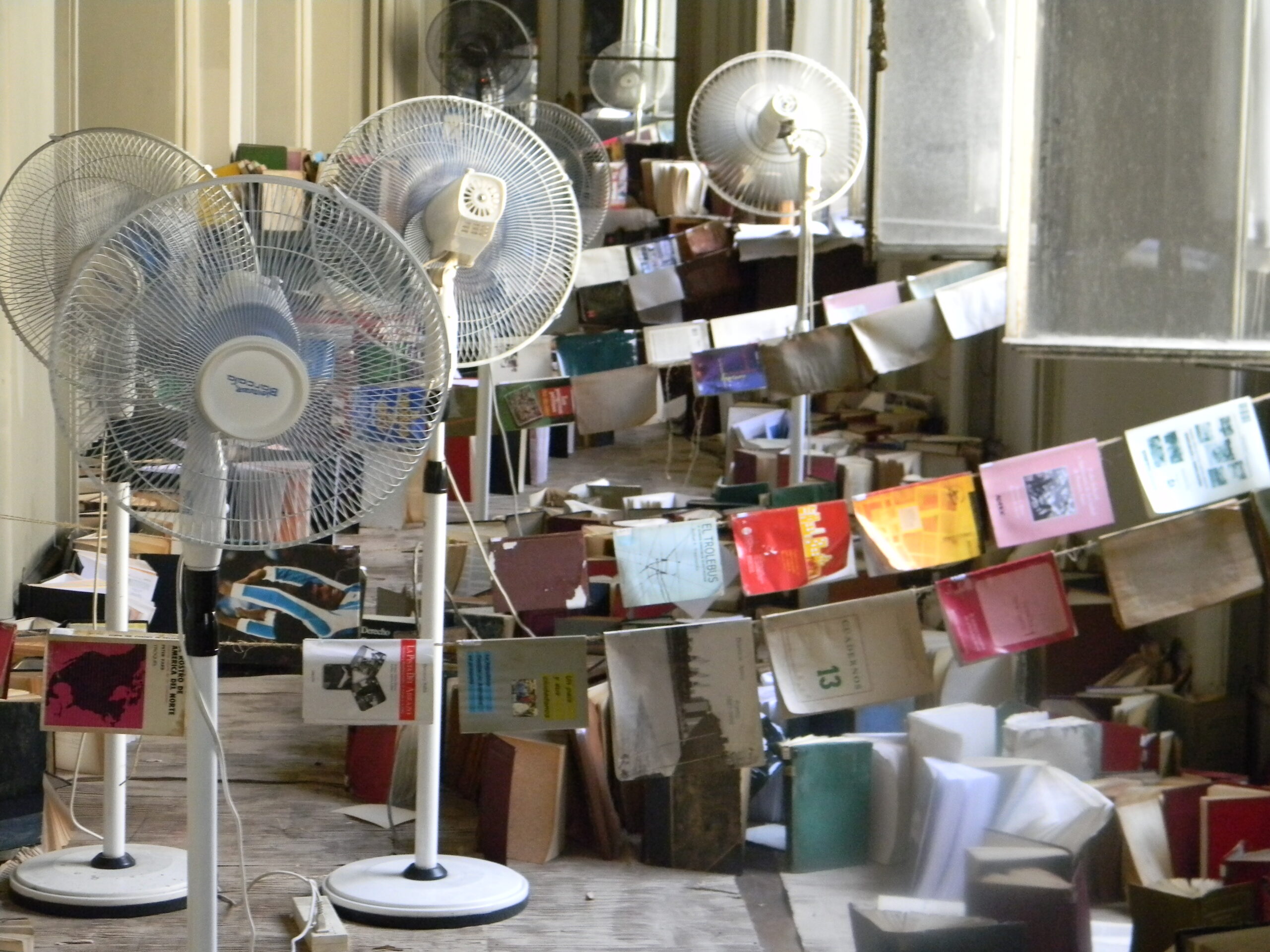
Fig. 7 – Fans used to dry items following a flood in the Library Esteban Echeverría, Buenos Aires. Photo: Ana Masiello.
Health and safety
Because mold is a health hazard it is necessary to protect those handling contaminated objects. The level of protection depends on the extension of the mold growth. In the case of small scale growth, it is important to use personal protection equipment (PPE) such as disposable gloves (e.g. nitrile), a correctly fitting FFP3 mask or a respirator with HEPA filters for more complete protection, and to protect the eyes with safety goggles. For larger outbreaks it is advisable to use a full disposable body suit with adequate air filtration. A risk assessment should be undertaken to determine the appropriate PPE for the personnel involved.
To protect people and collections, the use of fume cupboards or suction tables to clean contaminated items is important. All equipment used during a mold outbreak (such as brushes and vacuum cleaner nozzles) should be disinfected after use to avoid further contamination.
Mitigation and management
Managing the risk of mold involves both prevention and response: keeping conditions unfavorable for growth while also being prepared to address mold quickly when it appears.
Preventive measures
As mentioned in Part I, environmental control is a crucial measure to manage moisture and temperature, and usually includes monitoring relative humidity and temperature. It is also insightful to monitor the dew point and absolute humidity because these parameters inform us of the risk of condensation on colder surfaces and help better understand sources of moisture (whether internal or external).
In some cases, however, it is a challenge to maintain uniform environmental conditions. Large rooms, rooms with external cold walls or cold floors, and enclosed areas such as deep shelves or drawers require special attention because microclimates can form. These are areas where relative humidity and temperature can differ from the intended conditions and create conditions favorable to mold. One way of eliminating such microclimates is to use air movement: fans or supplementary ventilation that mixes the air and reduces the variation in relative humidity and temperature across the space.
Conserv Cloud Pro includes a Mold Risk Score indicator. The software reviews the data and automatically evaluates mold risk based on research completed at the Image Permanence Institute. Read more here.

Surveys help identify mold and objects that need cleaning (dust or mold removal). Collections or areas that have previously been affected by mold growth are usually surveyed more frequently because the risk of future growth is potentially higher in these areas. Rather than conducting comprehensive surveys, which can be very time-consuming, spot checking can be an efficient approach. It can also be advisable to conduct surveys more frequently in areas where the control of temperature and humidity is more challenging, as the risk of mold is higher.
Responding to mold growth
Once mold is detected, preventive strategies should be continued when possible to keep the environment as adverse to growth as possible and stop ongoing biodeterioration. The response will depend on the extent of growth found and if the mold is active or dormant.

Fig. 8 – Temporary air movement used to dissipate areas with high relative humidity in the sound library. Photo: Argentina, Instituto Nacional de Musicología Carlos Vega. Ana Masiello.
There is an important distinction between active and dormant mold. Active mold must be treated urgently because it is actively deteriorating the substrate and it will spread spores that are ready to produce more colonies. When dormant mold is found, it can be isolated until treatment is possible, as long as environmental conditions remain adverse to growth.
Distinguishing between active and dormant mold can be challenging. Unless we know if the mold growth is recent, assessing if it is actively growing based only on visual examination can be difficult: active mold might look flat and inactive and dormant might look fluffy. However, a powdery aspect usually indicates a dormant state, and musty smell is present in active infestations.
Still, there are ways to test mold’s current state and ability to develop. An indication of the viability of mold and mold spores is the presence of adenosine triphosphate (ATP). This is the main energy-carrying molecule in cells and is commonly used as an indicator of metabolic activity. There is a higher generation of ATP when the metabolic activity is higher and lower for lower activity (dormant state). This test is relatively simple, it requires swabbing a surface and introducing the swab in a portable ATP meter, which gives the result in a short period of time.
Another way to test if mold is active is to collect and culture a mold sample on growth media such as agar in lab conditions. This standard test assesses growth and sporulation over time to determine whether the microorganisms are viable. This test requires lab faculties and should be done by a qualified biologist or microbiologist.
After the extent of growth is assessed, it is important to decide where treatment on affected objects will be done and whether they can be safely moved. If transport is not an option, cleaning has to be done in situ. Where only a few items are affected, a more contained response is usually preferable. A larger infestation – for example, one following a water leak that went undetected for a few days, will involve a more complex approach. The latter will often include more people, more space to quarantine and work on affected items, potentially closing an area to visitors, and a longer treatment period. In such cases, there is a high risk of contamination while handling and treating objects because more active mold means more mold spores are being released. Extreme events, such as floods, require swift action. Mold will not grow on drenched materials, but as drying starts, it can start developing quickly. As a result, it is important to dry materials as fast as possible.

Cleaning mold residues is a specialist task and is associated with hazards to the operators and those in their vicinity. There are also considerations to make in terms of the treatment approach and how that might impact the collection object. Many of the following treatments may be best contracted to external specialized companies with the relevant safety training, conservation knowledge, equipment and liability insurance.
Cleaning
It is important to consult with a conservator before attempting any cleaning to get a fuller understanding of the damage risks to the objects from the cleaning approach. Depending on the amount of mold growth, cleaning affected objects might be possible in situ (in storage or in a gallery). Spaces might have to be closed to the public during this time. Cleaning can be done with dry or wet techniques using brushes and swabs, or vacuuming (equipped with high efficiency particulate air (HEPA) filters) while brushing. Surrounding surfaces, such as drawers and shelves, also need to be cleaned to avoid further contamination. A challenge found when cleaning mold is that it is difficult to assess the effectiveness of mold removal. It is not always clear how much mold has been removed, especially because hyphae grow within the structure of materials. Changes in color can be an indicator of progress, but are not conclusive, and observations under magnification are helpful.
For larger infestations objects should be placed in quarantine to avoid further contamination of other items, when treatment is not possible immediately or if it’s not clear if the cleaning was fully effective. Quarantine should be done at low temperatures and low humidity to slow down mold development.
Despite prevention being the best option, in some cases chemical treatments can be an option for affected materials. Antifungal chemicals can be toxic, from causing eyes and skin irritation (e.g. formaldehyde) to being carcinogenic (e.g. ethylene oxide and formaldehyde). They can also damage materials, such as by leaving marks or accelerating deterioration of certain components such as metals and pigments. As a result, many of these treatments have been discontinued in conservation practice.
Some less toxic treatments have been developed recently, such as the use of ethanol solutions, which has shown to have antifungal properties. Despite the lower toxicity, all chemical treatments should be done by or under the supervision of a conservator because there is always a risk of damaging objects, as well as the health risks associated with such chemicals. Physical antifungal methods for contaminated collections can also be used. Some examples include freezing, low-oxygen environments, and ultraviolet radiation. Not all are feasible in every situation and again a conservation professional should be consulted for guidance.
Before undertaking any mold remediation actions make sure that you identify and comply with all relevant safety precautions for the institution and country in which you are working.
Challenges in dealing with mold
Identifying mold
Is it mold? This is a common question when spots or stains are found on materials. The answer is not always straightforward. Sometimes it is difficult to distinguish mold from salt efflorescence or corrosion products. To rule out the presence of salts, a sample can be mixed with water: salts will dissolve but mold will not. Otherwise, observation under magnification, when possible, is a good step in identification.
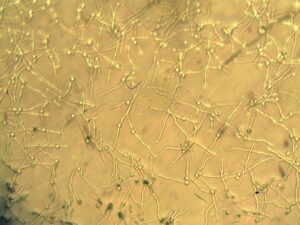
Fig. 9 – Magnified image of fungal hyphae. Aspergillus versicolor after 20 hours of growth under ideal conditions, 200X magnification. Photo: Morena Ferreira.
Identification of fungal species is complex and not always necessary for response and treatment. If one is interested in identification you can utilize DNA analyses for accurate lab results. Observation under magnification using a microscope, a more widely accessible technique, can be used to identify some fungal genera (but not specific species). For example, the genera Aspergillus and Penicillium can be distinguished by their reproductive structures. In Aspergillus, strings of round spores radiate from a “head” attached from a thin “stalk”. Penicillium spores are also organized in strings but are attached to a broom-like structure, which in turn is attached to a “stalk” that is divided by septa (cellular divisions perpendicular to the length of the stalk).
Species identification can be useful because the optimal growth temperature and humidity vary between species, and that information can help design more targeted preventive measures and treatments. For example, a new species of mold resistant to drier conditions was recently identified in a museum in Denmark. Identification led the team to adjust humidity and temperature targets, ultimately preventing further growth. Species identification can shed light on cases where mold is growing despite the environmental conditions that would typically prevent growth.
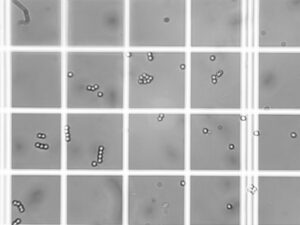
Fig. 10 – Spores of Penicillium brevicompactum. Average diameter: 0.0035 mm. Photo: Morena Ferreira.
The indoor environment
Controlling humidity and temperature is a challenge in most buildings, and as discussed in Part II, the conditions that support fungal development overlap with the conditions that are comfortable for humans and for most collections. This presents a fundamental tension with no simple solution.
Although moisture and temperature are the main triggers of mold outbreaks, identifying the root cause of a specific outbreak is not always obvious. For example, monitoring data from a single sensor might show an overall stable environment, while a nearby microclimate may be sustaining conditions that are favorable to growth. Identifying possible microclimates and placing sensors to capture the conditions there can provide a more complete picture. When you identify a potential outbreak you may need to increase the number of sensors operating in your space as you search out the pockets of mold-supporting conditions. As noted above, a sensor monitoring room conditions may not identify the danger zones. Wireless systems like Conserv allow for easy installation of additional sensors as necessary. If possible, one can set up fans to create air movement as that will help reduce the high relative humidity and cold temperatures in microclimates by mixing the stagnant air with the conditioned air of the room.
Dormancy of spores is a real challenge because changes in environmental conditions can trigger unexpected germination and growth. Mold also grows on surfaces that are not always visible or easily accessible, such as the interior of books, on the back of furniture, or behind book shelves.
Controlling indoor moisture and temperature also raises questions related to energy use, cost, and its associated carbon footprint. Sufficient good quality monitoring data can help target the response to where it is needed.
In summary: Mold is disruptive because it is time consuming and because it is resource intensive, and immediate response comes at the expense of other planned work. Tthe challenges encountered when dealing with mold are numerous and complex. For that reason, they need to be assessed in the context of every specific case.
Conclusion
The biology of mold is complex, and the challenges of managing it in a collection environment are significant. However, the fundamental techniques to reduce mold risk are clear: control moisture, monitor consistently, inspect regularly, and act early. Understanding the science of mold makes those actions more targeted and more effective.
Mold mainly depends on moisture and suitable temperatures to develop, making environmental control the most important preventive strategy, but there are limitations that can make it hard to achieve our objectives through control alone. Identifying and eliminating moisture sources, anticipating problem areas before growth occurs, and recognizing mold when it appears (particularly in hidden spaces, inside books, and behind objects) are all very important. Flexible and continuous environmental monitoring systems are now accessible to institutions of all shapes and sizes and can help provide the data necessary to identify areas of risk, monitor them, and take action quickly when necessary.
Preventing biodeterioration by mold is an evolving subject. New species have been found that defy current knowledge and preventive measures, and changes in the climate bring new challenges to some areas, in the shape of floods and warmer and wetter seasons. In many cases, historic buildings were not designed for these new conditions.
Each collection, building, and climate is different, and the strategy for managing mold must reflect those specific circumstances, as well as the resources available. The most robust protection for any collection is a combination of informed expertise, the right policies and controls, and a data-informed understanding of the risks present for the collection and its environment.
About the Author
 Dr. Morena Ferreira is a conservator specializing in preventive conservation, with particular expertise in the prevention of mold development in heritage materials and environmental control in museum contexts. She teaches risk management in cultural heritage at the Escola Superior de Conservació i Restauració de Béns Culturals de Catalunya in Barcelona, Spain. Prior to completing her PhD in Heritage Science at UCL (London) in 2023, Morena worked in the conservation of wall paintings, stone, and easel paintings in Portugal, Brazil, and the UK.
________________________________
Bibliography
Ayerst, G. 1969. ‘The Effects of Moisture and Temperature on Growth and Spore Germination in Some Fungi’. Journal of Stored Products Research 5 (2): 127–41. https://doi.org/10.1016/0022-474X(69)90055-1.
Bastholm, Camilla J., Anne M. Madsen, Birgitte Andersen, Jens C. Frisvad, and Jane Richter. 2022. ‘The Mysterious Mould Outbreak – A Comprehensive Fungal Colonisation in a Climate-Controlled Museum Repository Challenges the Environmental Guidelines for Heritage Collections’. Journal of Cultural Heritage 55 (May): 78–87. https://doi.org/10.1016/j.culher.2022.02.009.
Ferreira, Morena, Josep Grau-Bove, Hector Altamirano, and Nigel Blades. 2022. The Causes of Air Movement in Hidden Indoor Micro-Environments: Measurements in Historic Bookshelves. December 2. https://doi.org/10.14324/111.444/000134.v2.
Florian, Mary-Lou. 2003. ‘Water, Heritage Photographic Materials and Fungi’. Topics in Photographic Preservation 10: 60–73.
Guild, Sherry, and Maureen MacDonald. 2020. Mould Prevention and Collection Recovery: Guidelines for Heritage Collections – Technical Bulletin 26. Canadian Conservation Institute. https://www.canada.ca/en/conservation-institute/services/conservation-preservation-publications/technical-bulletins/mould-prevention-collection-recovery.html#a3ae.
Pinheiro, Ana C., Sílvia O. Sequeira, and Maria F. Macedo. 2019. ‘Fungi in Archives, Libraries, and Museums: A Review on Paper Conservation and Human Health’. Critical Reviews in Microbiology 45 (5–6): 686–700. https://doi.org/10.1080/1040841X.2019.1690420.
Scott, Graeme. 1994. ‘Moisture, Ventilation and Mould Growth’. Studies in Conservation 39 (sup2): 149–53. https://doi.org/10.1179/sic.1994.39.Supplement-2.149.
Sedlbauer, Klaus. 2002. ‘Prediction of Mould Growth by Hygrothermal Calculation’. Journal of Thermal Envelope and Building Science 25 (4): 321–36. https://doi.org/10.1177/0075424202025004093.
Sequeira, Silvia O., Alan J. L. Phillips, Eurico J. Cabrita, and Maria F. Macedo. 2017. ‘Ethanol as an Antifungal Treatment for Paper: Short-Term and Long-Term Effects’. Studies in Conservation 62 (1): 33–42. https://doi.org/10.1080/00393630.2015.1137428.
Sterflinger, Katja. 2010. ‘Fungi: Their Role in Deterioration of Cultural Heritage’. Fungal Biology Reviews 24 (47–55): 47–55. https://doi.org/10.1016/j.fbr.2010.03.003.