If you’re working out how to evaluate an environmental monitoring vendor, the Victoria and Albert Museum has effectively done the groundwork for you. The V&A recently ran an open, multi-stage tender to build a framework of vetted Environmental Monitoring...
The Conserv team is growing! We’re thrilled to introduce Jenny Mathiasson as our new Regional Accounts Manager for the UK. Jenny is an objects conservator and collections care consultant based in west Wales, where she runs Kuriosa Conservation out of a bright...
The Conserv team is growing! We’re thrilled to introduce Jane Henderson as our new Community Advisor. You may recognise her as our host for the “Conserv Conversations” programme in the online community. Jane Henderson (BSc, MSc, PACR, FIIC, FRHisS,...
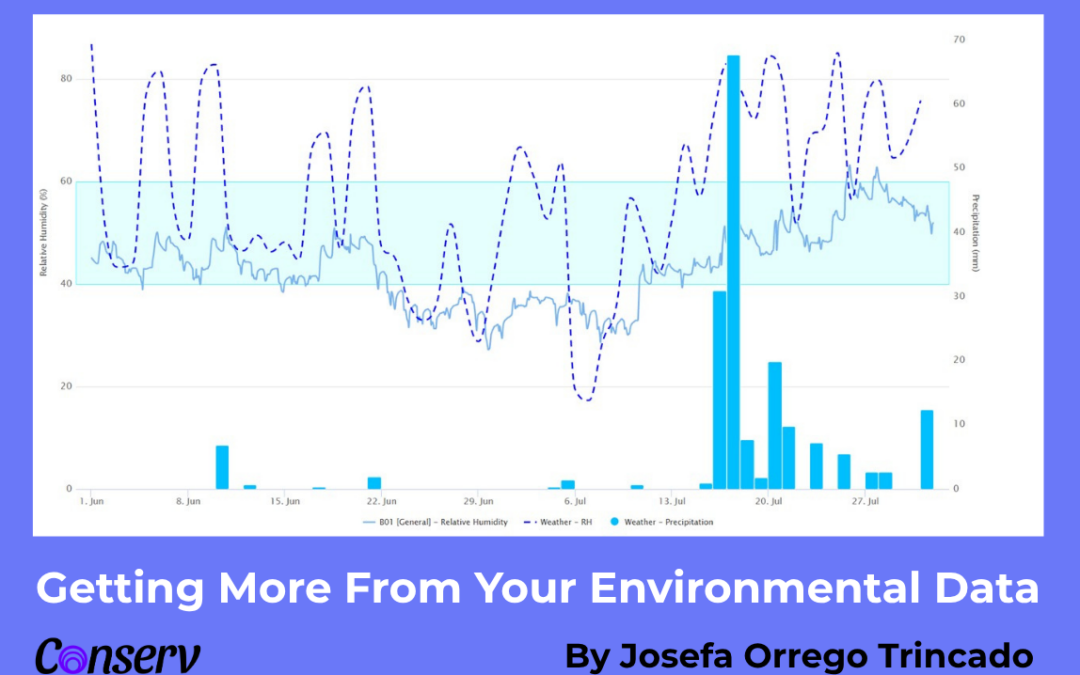
Did you know that Conserv’s environmental monitoring software can be incredibly helpful for preventive conservation, even if you don’t use Conserv sensors? For the last two years, Conserv has become an essential tool in my work as a Preventive Conservator at the Museo...
Introduction In Spring 2026, Simmons University’s School of Library and Information Science began offering a course for students to learn about and apply the principles of preventive conservation, including hands-on environmental monitoring for archives and museum...
The Conserv team is growing — and so is what we offer the field. We’re thrilled to introduce Christopher Cameron, our new Director of Conserv Services who starts next month. Chris brings more than 13 years of experience working alongside cultural heritage...