The Joyner Library at East Carolina University sits on sandy soil with a high water table in a coastal pine swamp. Storage for its Special Collections department is housed in the building’s basement, posing consistent issues with leaks and water. Conservator Larry Houston is using Conserv to mitigate leaks in real time and protect irreplaceable collections from irreparable damage.
The Challenge
In the wake of 2016’s Hurricane Matthew, Larry discovered a major leak in a wall in the special collections space. By the time he found it, it had already wreaked havoc. The sub floor for compact shelving was dry-rotted with mold underneath it, and much of the shelving had to be removed. Long-time library staff told Larry the space had a history of leaks since 1997, and because Matthew struck within his first three or four months on the job, a slow leak that had likely been building for close to two decades suddenly became impossible to ignore. The dry rot was discovered not long after the storm, though the full extent of the damage wasn’t fully understood until that following May.
The damage to the subfloor was severe enough that when Larry lifted the carpet in the affected area, he could push his finger straight through the ¾-inch plywood underneath with almost no resistance — the carpet itself was the only thing holding the subfloor together. The resulting hole was roughly three inches across. The collection materials stored on that side of the room were removed entirely and never returned. The shelving on the other side, where the subfloor had stayed intact but the floor had gotten wet, still had to be sheeted, sealed, and kept under positive pressure until the mold issue next door was resolved. With storage space already at a premium, the emptied half of the room was eventually filled with blueprints on shelving with generous ground clearance — not an ideal fix, but a necessary one given the space constraints.
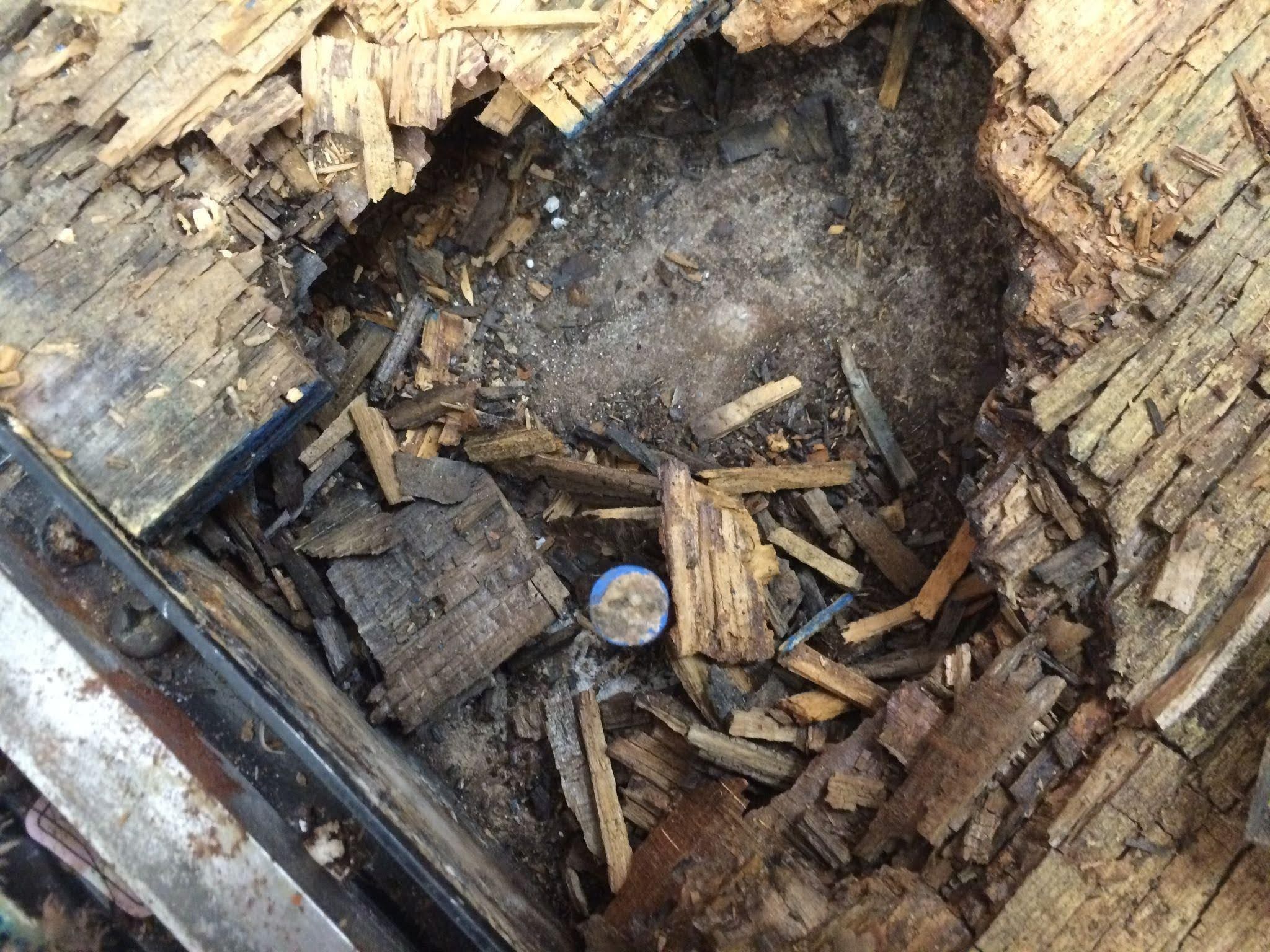
Dry rotting in the ECU Special Collections subfloor after Hurricane Matthew.
The leak had been building for some time and persisted well after this incident. Facilities staff were slow to act on mitigating it, and the alarm system at the time proved unhelpful. “It just said, ‘Hey, there’s a leak!'” Larry explained. “It didn’t say how bad, how many, what it was, where it was. It was just, ‘There’s a leak!'” In humid conditions, the carpet absorbed enough moisture to complete the sensor circuit and set off a false alarm. To make matters worse, every sensor in the system was daisy-chained together, so even a real leak gave no way to tell which sensor — or which floor — had actually been triggered. Campus police eventually deactivated the system altogether because of the sheer number of false alarms, but neither they nor the campus alarm technician told the library it had happened; Larry only discovered the system was offline after he was hired, when he tested it himself. He also found that the batteries in the audible leak alarms had expired back in 1997 — previous staff responsible for testing and maintaining the systems hadn’t passed those duties on before they left.
The Solution
With the aftermath of Hurricane Matthew still plaguing Special Collections years later, Larry started noticing Conserv at conferences and hearing about it in library preservation circles. He decided to invest in Conserv leak detection equipment to start taking more direct control of the issue.
To manage the ongoing leak in the wall, Libraries staff built a “retention pond” around the area just outside of it with a barrier 4 inches high around it, containing water in one small spot. They put one Conserv rope sensor inside the pond and one outside of it.
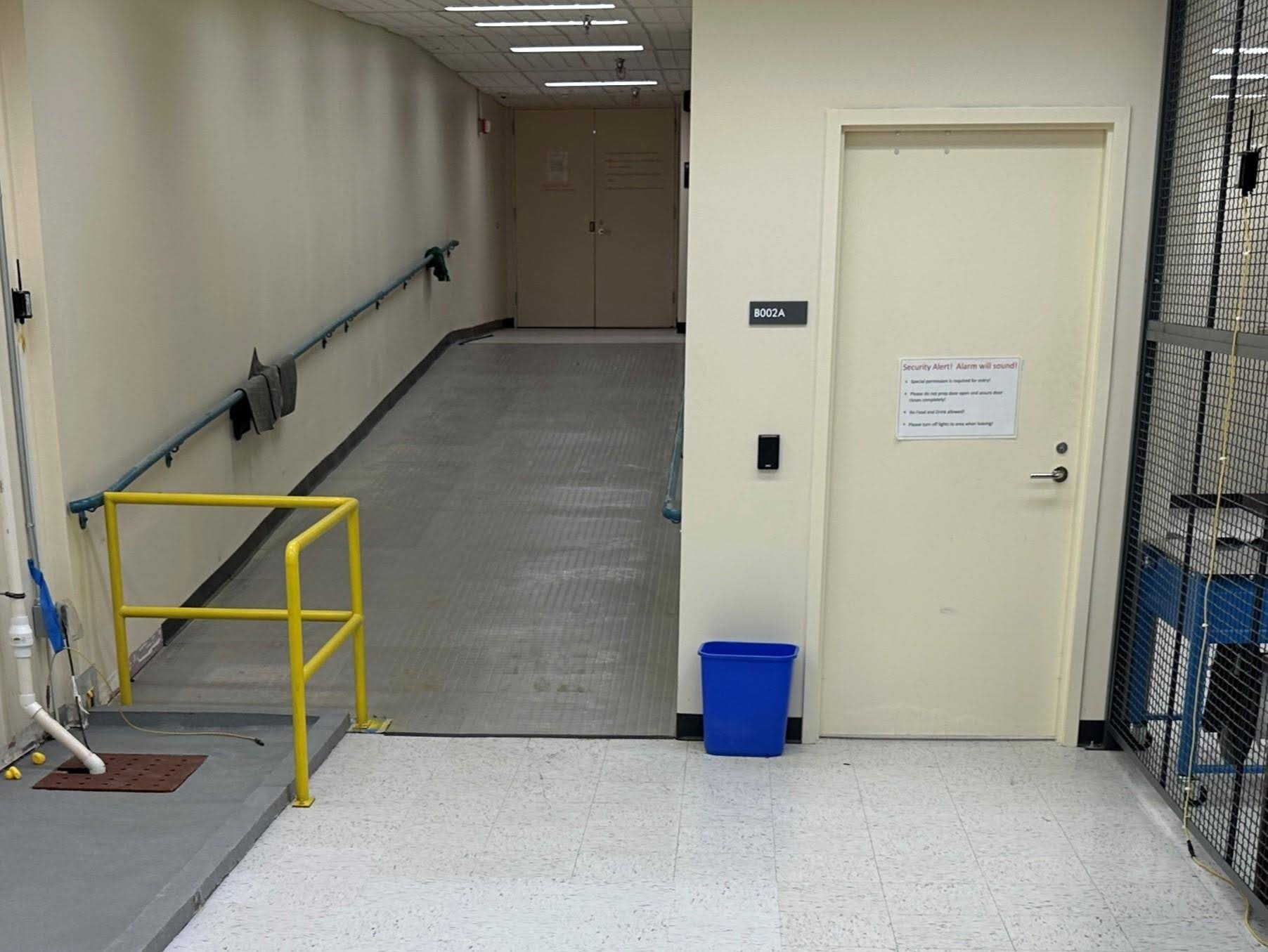
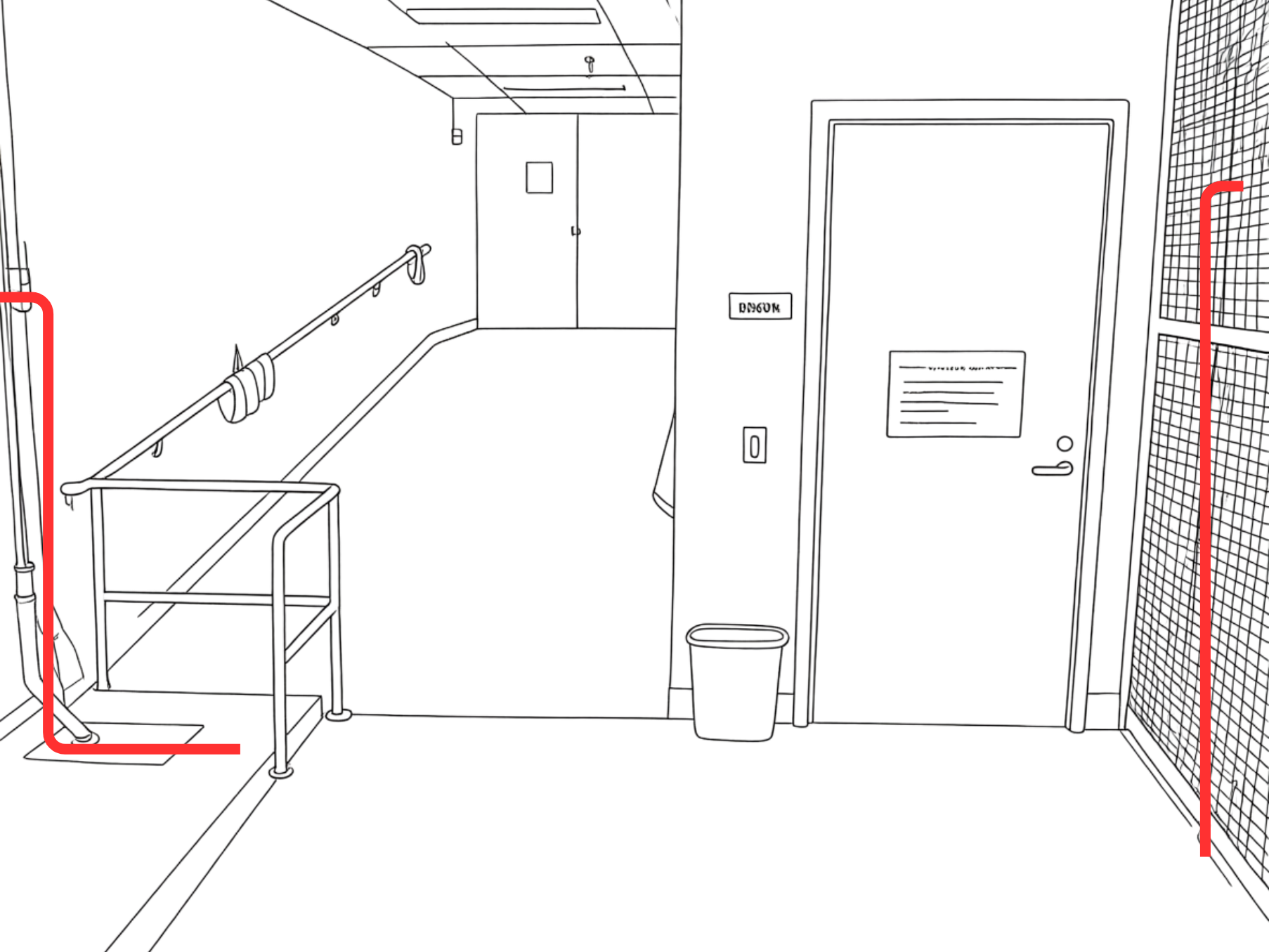
The two sensors are set up to alert different people for different levels of urgency. The first, placed inside the pond, notifies Building Operations, who oversee housekeeping, the moment water starts leaking in from the wall so they can come in and vacuum it up. The second sensor, placed outside the pond, is reserved for Special Collections staff, and is set to alert them when water has flooded into the space to the point of emergency. As a result of the early response enabled by the first sensor, the second one has not been set off to date — a sign that the system is catching problems well before they become emergencies.
Results
The real-time information provided by the Conserv leak sensors, and the easy access to sensor data through Conserv’s browser-based software, has brought Larry much-needed peace of mind. He can now always easily see when he needs to take action — and when he doesn’t. “I’ve gotten calls while I was on vacation, ‘I noticed that there was this thing going on at the building. How’s our collection doing?'” Larry recounted. “And I was able to go and pull up the Conserv data from my phone on the beach and send back a quick screenshot and an e-mail and say ‘Everything’s fine with the collection. Don’t worry about it.'” Conserv’s offline device alerting and “maintenance included” subscription, including battery and unit replacements where necessary, is also a stark contrast to the prior leak system.
With hard and comprehensible data now in hand, Larry has also been able to prove to Facilities staff that better equipment is needed to manage the Special Collections leak. The Facilities team installed a sump pump to help keep flooding at bay after seeing the reports coming out of the Conserv system.
A Lasting Impact
A few Conserv sensors and a quick and simple setup was all it took for Larry to have two proactive monitoring mechanisms for his collections — a first-line monitor to immediately alert the right people that water cleanup is needed, and a backup mechanism to enable quick action if things go catastrophically wrong. “Being able to have our own control over the system, being able to monitor it, and being able to have it communicated clearly has been fantastic,” he told us.
Putting real-time data directly in the hands of collections staff is a true game-changer in caring for collections. We at Conserv know that caring for collections doesn’t come from simply collecting data, but being able to take action on it. Larry’s story demonstrates exactly why that is so important.
Worried about water in your own collection storage? See how Conserv leak detection works, or talk to a specialist about your building.