
Introduction
The Molly Brown House Museum in Denver preserves the legacy of Titanic survivor Margaret “Molly” Brown through period rooms, exhibitions, and a growing archive of Brown family materials. As a 19th-century structure, the home presents environmental challenges that place irreplaceable artifacts at risk. Conserv’s monitoring system now helps staff maintain safer conditions across the house, especially in the vulnerable basement archive room.

The Molly Brown House Museum.
Credit: David Keith
The Challenge
Despite recent restoration work, the historic house still experiences unpredictable humidity and seasonal shifts. In 2023, Denver’s unusually humid summer pushed moisture levels higher than the museum had seen before. While the team could do little throughout the main floors, the archives required strict control.
“The archives are our top priority collection. They are irreplaceable.
Having those immediate alerts? I never want to live without them again.”
– Stephanie McGuire, Curator of Collections
The biggest risk, however, came from the adjacent boiler room, which had suffered several pipe failures in past winters. Floods often went unnoticed until water was visibly pouring out of the front of the house.
“We used to find out about floods only when someone on the street told us.”
– Stephanie
With archival acquisitions rapidly increasing, including letters, maps, and scrapbooks from Brown descendants, the museum needed a dependable, real-time way to detect water intrusion and humidity spikes.
The Solution
The team installed two Conserv point leak detectors in the archival storage and boiler room, sending immediate alerts to staff. Conserv’s humidity sensors also revealed the archive room regularly exceeded the recommended 50% RH, prompting the museum to purchase a dehumidifier.
“We didn’t know we needed to get a dehumidifier… until we started using Conserv and found it was going up above that 50%.”
– Stephanie
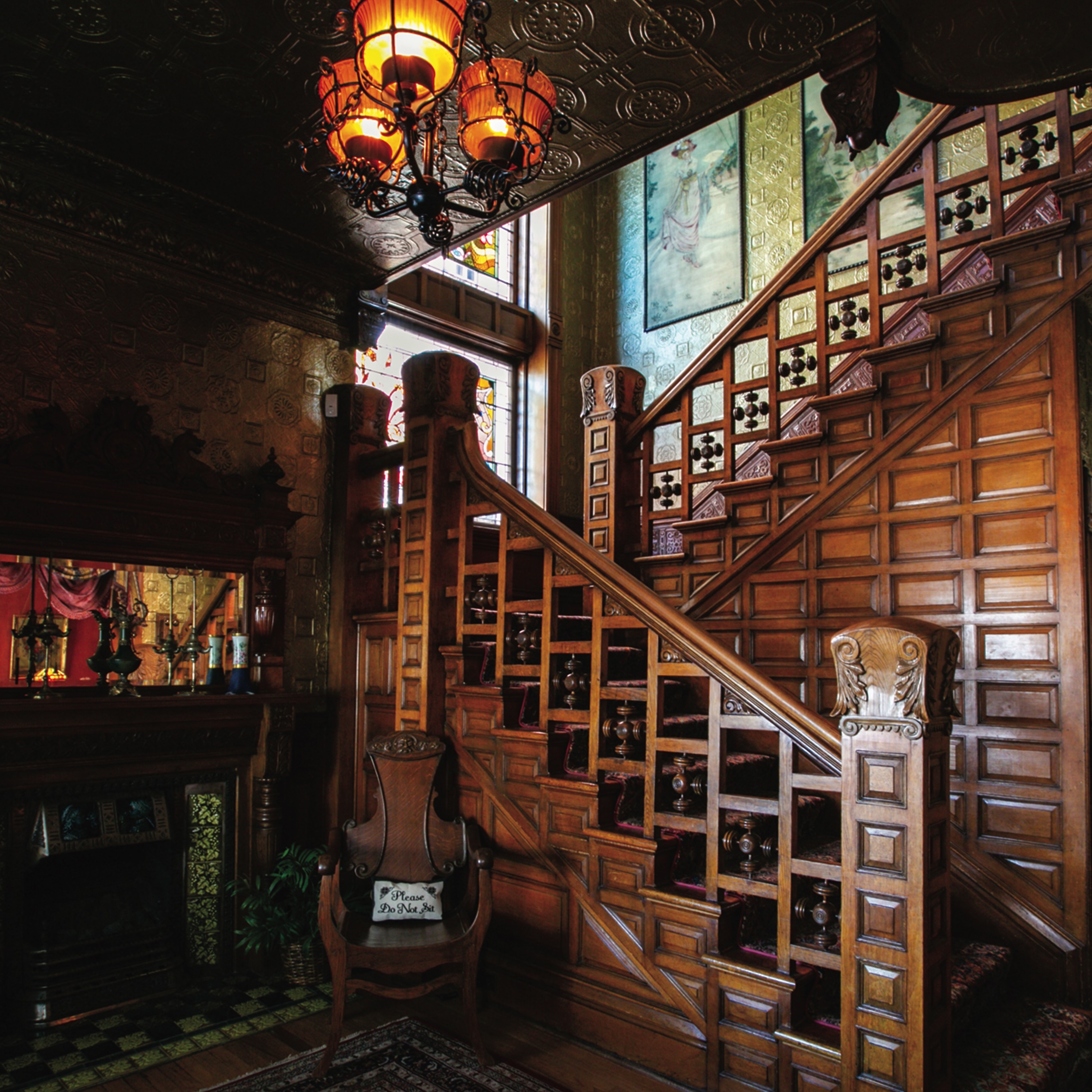
The entrance hall of the Molly Brown House Museum
Results
With Conserv, the Molly Brown House Museum strengthened protection for its highest-value collections:
“Those alerts have been amazing throughout this humid summer to just remind us to turn on the dehumidifier. If there’s a leak, then we know what to do. We haven’t had an alert for a leak, thank goodness, but it does give us that peace of mind.“
– Stephanie
Some of the benefits of installing Conserv for the Molly Brown House Museum have included:
- Immediate visibility into leaks, eliminating past delays in discovering boiler room floods
- Active humidity management in the archive room
- Accurate environmental data that informed the decision to purchase a dehumidifier
- Improved workflows for reporting and long-term planning
- The Conserv dashboard replaced an outdated system, making loan reporting and long-term trend review significantly easier.

The library of the Molly Brown House Museum.
Credit: Rowan Taylor.
Takeaways
This story demonstrates how historic house museums can leverage real-time environmental data to protect their collections, even with limited resources. Here are the key lessons:
Real-time alerts prevent crisis
Small issues don’t become disasters when staff can respond immediately to environmental changes.
Small interventions have big impacts
A single dehumidifier can transform conditions when guided by accurate environmental data.
Shared visibility empowers staff
Multiple team members with access enable quick, coordinated action to protect collections.
Want to learn more about how Conserv can help protect your collection? Book some time with our team to discuss your needs.